

Blog Category: All, Parts and Accessories
RV TIPS & TRICKS
Why Your Propane Refrigerator Struggles in Hot Weather: Solutions and Tips
Why Your Propane Refrigerator Struggles in Hot Weather: Solutions and Tips
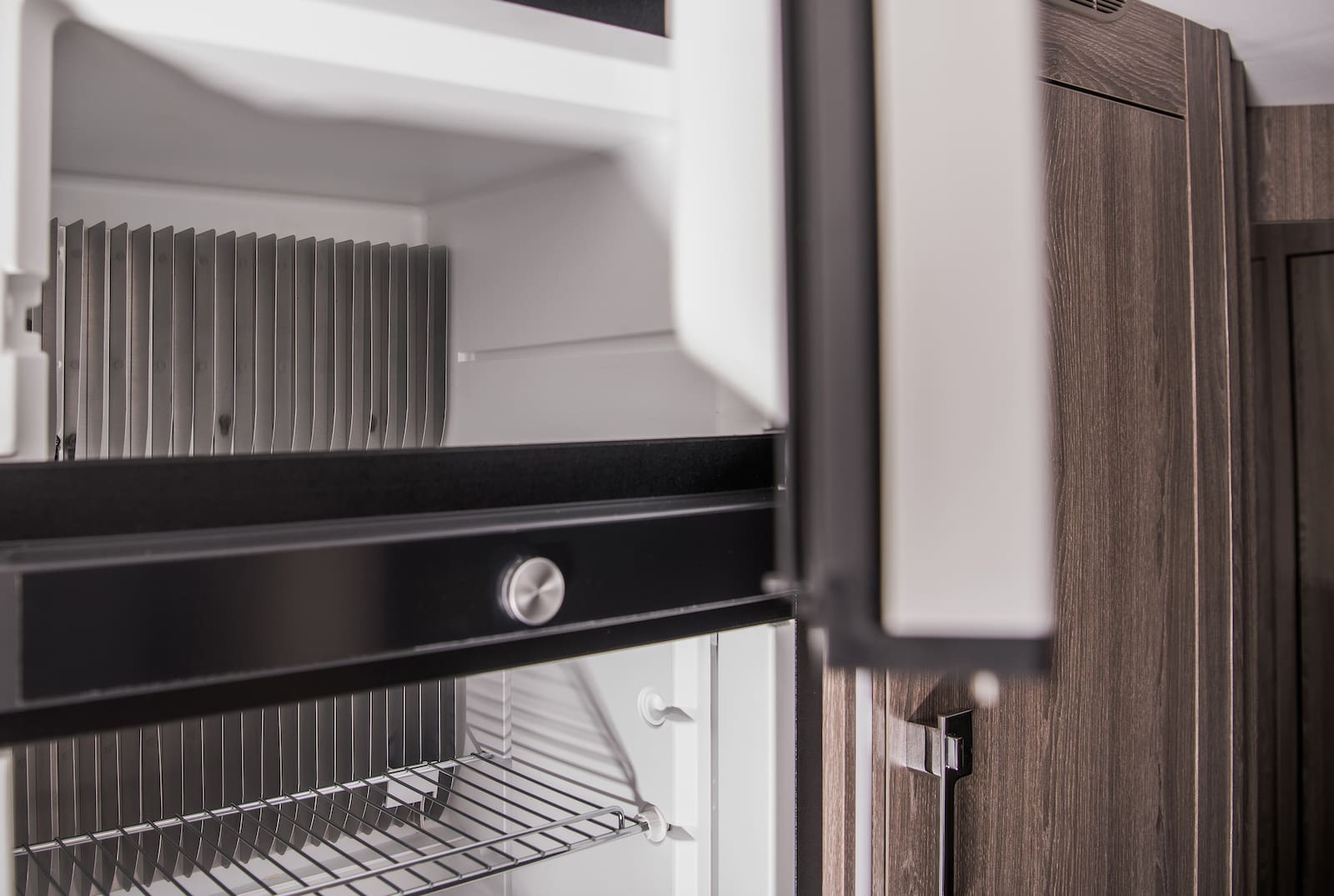
How propane refrigerators work
A propane refrigerator uses an absorption process with no moving parts. Propane, ammonia, water and hydrogen work together to create the cooling, with a propane flame heating an ammonia and water solution in the generator to start the cycle.
Why heat is a problem
1. High ambient temperature. Hot air reduces the condenser’s ability to cool the ammonia gas. Propane refrigerators do not perform optimally above 30 °C (86 °F).
2. Poor ventilation. The condenser coils need airflow. A fridge pushed too close to a wall can’t get it.
3. Sun exposure. Direct sun heats the exterior, which raises the internal temperature.
4. Overloading. Overfilling blocks the internal air circulation, and warm items add to the thermal load the system has to shed.
Tips to improve performance in hot weather
- Add fans to help dissipate the condenser heat
- Provide shade with an awning or an umbrella
- Defrost regularly so buildup doesn’t insulate the evaporator coils
- Open the door as little as possible
- Keep the fridge level so the ammonia solution circulates properly
Maintenance and upkeep
Clean the burners. Remove debris and residue — a yellow flame means the combustion isn’t right and the generator isn’t getting the heat it needs.
Check for gas leaks. Soapy water on the connections; bubbles mean a leak.
Inspect the coils. Dust on the condenser coils blocks heat transfer.
Replace worn parts with manufacturer-specified components.
Thinking about electric?
A propane fridge has the advantage of not draining the batteries, but electric models are considerably more efficient. If you go that way, pair it with AGM or gel batteries built for constant power demand — see our battery guide.