Blog Category: All, Buying an RV, Maintenance, Tips
RV TIPS & TRICKS
Winter RVing: Your Guide to Year-Round Adventures
Winter RVing: Your Guide to Year-Round Adventures
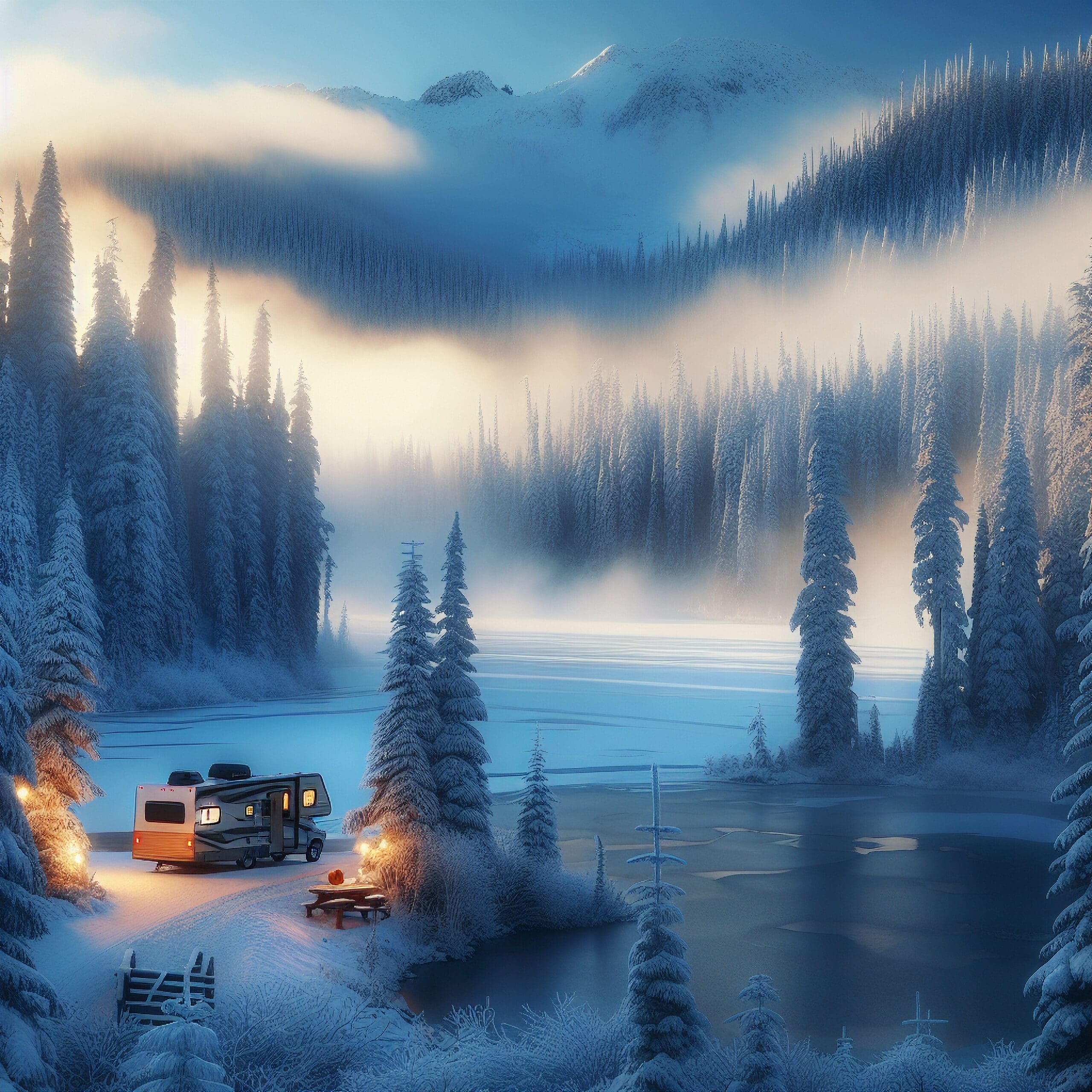
There are many reasons to love living in Canada, but having four distinct seasons, each with its special charms, has to be one of them and, yes, that includes winter. Winter RVing in Canada is a fantastic way to fall in love with a season that is often underappreciated: snow-transformed landscapes, quiet campsites, and — with a bit of planning — an RV that is a warm and cosy retreat, letting you enjoy the winter season without giving up comfort.
Getting Ready for Winter RVing
Must-Have Equipment and Supplies
Warm clothing. Think in thermal layers that can be added and peeled off as the temperature rises and falls. Avoid cotton, which stays wet, in favour of materials that wick moisture away. Your hands and feet are especially vulnerable so bring insulated boots and gloves, and don’t forget that your body loses a lot of heat through your head, so warm hats that cover your ears are essential.
Reliable heating. Most standard RVs are not designed for extreme winter conditions but can be adapted for cold weather with proper preparation. Some models are built for it, with enhanced insulation, double-pane windows, heated underbellies and tank heaters. Even a well-insulated RV benefits from sealed drafts, thermal curtains and a portable heater.
An insulated water hose. Use a heated water hose or insulate your existing one to prevent freezing.
RV skirting. A protective barrier installed around the base of an RV to enclose the underside and act as a shield. Adding skirting is one of the most effective ways to improve insulation, conserve heat and protect plumbing during winter camping. Materials range from insulated vinyl panels to heavy-duty fabric, foam boards, or DIY options made of plywood or corrugated plastic. Professionally made skirting can cost $1,000 to $3,000, while DIY solutions may be as low as $200 to $500.
Snow tools. Bring a snow shovel, ice scraper and roof rake.
An emergency kit. Pack a first-aid kit, extra blankets, flashlights, batteries and a portable emergency kit.
Food and water. Stock up on non-perishable items, and keep fresh water in portable containers as a backup if your pipes freeze.
Fuel. Ensure your propane tanks are full and you have enough fuel for travel and generators.
More Recommendations to get your RV Winter-Ready
- Winterize the plumbing with RV antifreeze and pipe insulation
- Add insulation — thermal curtains and window foam
- Seal drafts around windows, doors and vents
- Manage moisture with a dehumidifier so mould can’t take hold
- Fit winter tires and keep them properly inflated
Canada’s Best Winter RV Destinations
Banff National Park, Alberta
Skiing, snowshoeing and hot springs, with year-round campgrounds and electric hookups.
Algonquin Provincial Park, Ontario
Snowshoeing and wildlife watching, with winter-friendly campground facilities.
Whistler, British Columbia
A premier skiing and snowboarding destination with RV parks that take winter travellers.
Mont-Tremblant, Quebec
Winter sports and village charm, with plenty of RV-friendly options near the slopes.